
What the FCC’s New Robotics Restrictions Mean for U.S. Manufacturing
The robotics industry is entering a new phase—one where manufacturing location, supply chain strategy, and component sourcing can be just as important as the technology inside the robot.
In July 2026, the Federal Communications Commission (FCC) added foreign-produced advanced robotic devices to its Covered List. The action applies to certain new foreign-produced advanced robotic devices seeking FCC authorization and can affect whether those products can be imported, marketed, or sold in the United States.
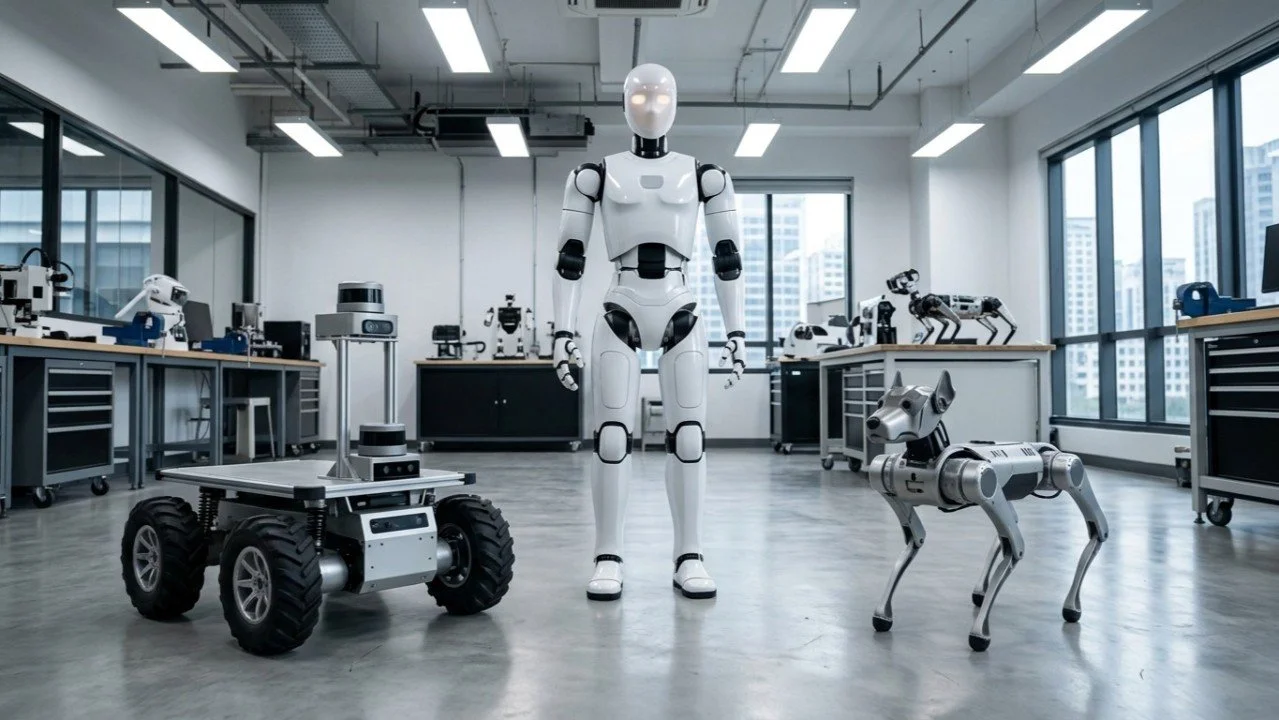
For robotics companies developing autonomous mobile robots (AMRs), automated guided vehicles (AGVs), humanoid robots, quadrupeds, and other connected robotic systems, the change creates another consideration when planning how and where products are manufactured.
What Changed?
The FCC's July 28, 2026 update added foreign-produced advanced robotic devices to its Covered List based on a national security determination. The FCC's definition includes certain mobile robotic devices that can navigate or move on the ground, operate autonomously or through remote commands, and incorporate technologies such as environmental sensors, network connectivity, and software controlling navigation or perception.
Importantly, the change does not retroactively prohibit previously authorized robot models or robots that customers already own. It primarily affects new models requiring FCC authorization.
The FCC has also established a process for certain foreign-produced devices to receive conditional approval, meaning the regulatory landscape is continuing to develop.
Why Manufacturing Location Matters
For robotics companies, compliance considerations can extend beyond final assembly.
As Michael Tanguay, Sales Manager at Applied Engineering, explains in his recent industry analysis, companies need to look closely at the country of origin and cost composition of their bill of materials (BOM) when evaluating their manufacturing strategy.
Michael's analysis highlights an important consideration: simply moving final assembly to the United States may not be enough in every situation. Depending on the product and applicable FCC requirements, companies may also need to evaluate the percentage of domestic component content and how that content is calculated.
This can create a difficult balancing act for robotics manufacturers.
A company may have spent years optimizing its supply chain around offshore component sourcing. Suddenly, manufacturing location, domestic content, component cost, and FCC authorization can all become interconnected decisions.
The Opportunity for U.S. Robotics Manufacturing
For robotics companies entering the U.S. market, these changes create an opportunity to rethink manufacturing earlier in the product development process.
Instead of waiting until a product is ready for production to evaluate manufacturing location, companies can consider U.S. manufacturing and domestic sourcing as part of their commercialization strategy from the beginning.
That can include:
Evaluating the country of origin for major BOM components
Identifying opportunities for U.S.-based sourcing
Reviewing domestic versus international manufacturing scenarios
Establishing U.S. assembly and integration capabilities
Evaluating supply chain risks and lead times
Building a scalable manufacturing process for production
Reviewing FCC requirements early in the product development cycle
The goal is not simply to move a product across the finish line. It is to develop a manufacturing strategy that supports compliance, scalability, cost management, and long-term supply chain resilience.
Where Applied Engineering Fits In
At Applied Engineering, we work with robotics and automation companies to manufacture complex electromechanical systems and assemblies.
Our capabilities include precision machining, sheet metal fabrication, electromechanical assembly, wiring, system integration, testing, and production support—allowing robotics companies to work with a single manufacturing partner across multiple stages of production.
Our San Jose manufacturing operation also provides robotics companies with a U.S.-based production option when domestic manufacturing is an important part of their supply chain strategy.
For companies developing AMRs, AGVs, mobile robotic platforms, and other advanced robotic systems, we can support the transition from engineering builds into repeatable production.
Manufacturing Robotics in the U.S.
The robotics industry is evolving quickly, and regulatory requirements are becoming another factor companies need to consider when developing their go-to-market strategy.
As Michael Tanguay points out, companies should be evaluating these considerations before they reach the FCC authorization stage—not after.
For robotics companies looking to establish or expand their U.S. manufacturing footprint, Applied Engineering can provide the manufacturing infrastructure, supply chain support, and electromechanical assembly capabilities needed to move from prototype builds toward production.
Building a robotics product for the U.S. market? Let's talk about your manufacturing strategy.
Note: This article is intended for general informational purposes and does not constitute legal or regulatory advice. Robotics manufacturers should consult qualified FCC and regulatory professionals regarding the requirements applicable to their specific products.
About Michael Tanguay
Michael Tanguay is Director of Business Development at Applied Engineering, where he works with technology companies developing complex hardware and advanced automation systems. With extensive experience supporting product development and manufacturing programs, Michael brings a practical perspective to the challenges robotics companies face as they move from development into production.
His original analysis, “FCC Ban on Foreign-Produced Advanced Robotic Devices and Power Inverters,” examines the potential manufacturing and supply chain implications of the FCC's 2026 Covered List